A handheld for the tiny gaps between everything else.
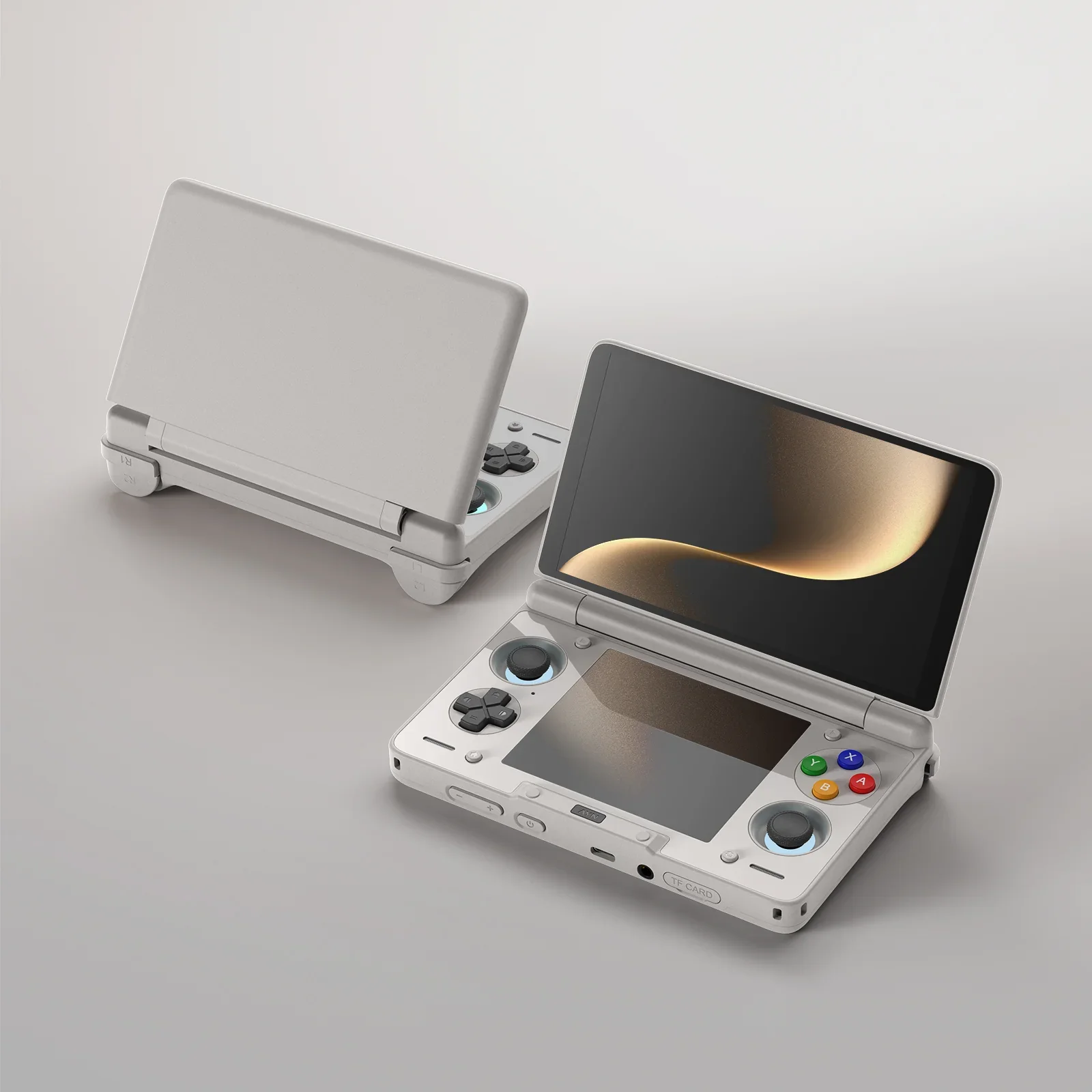
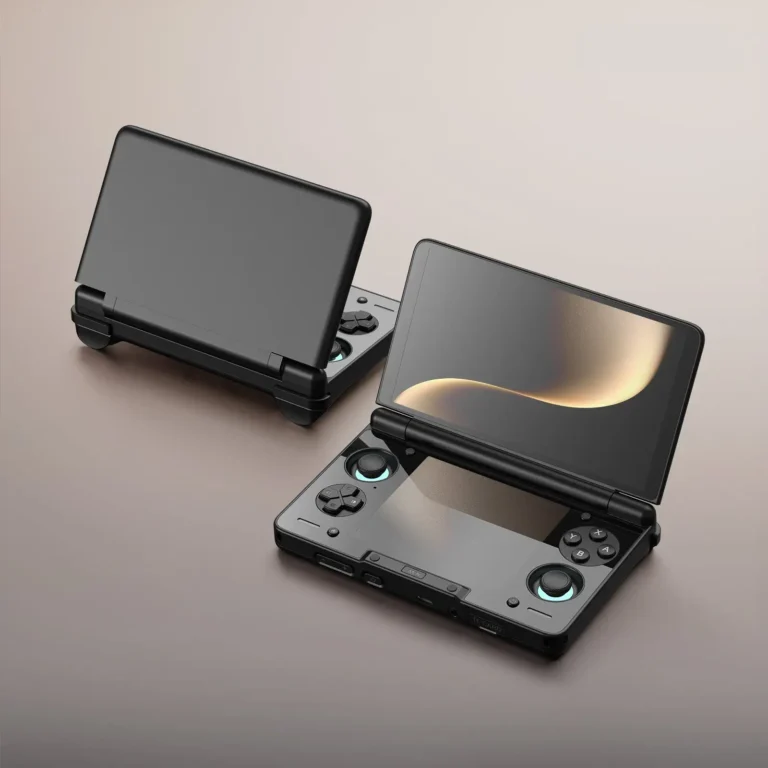
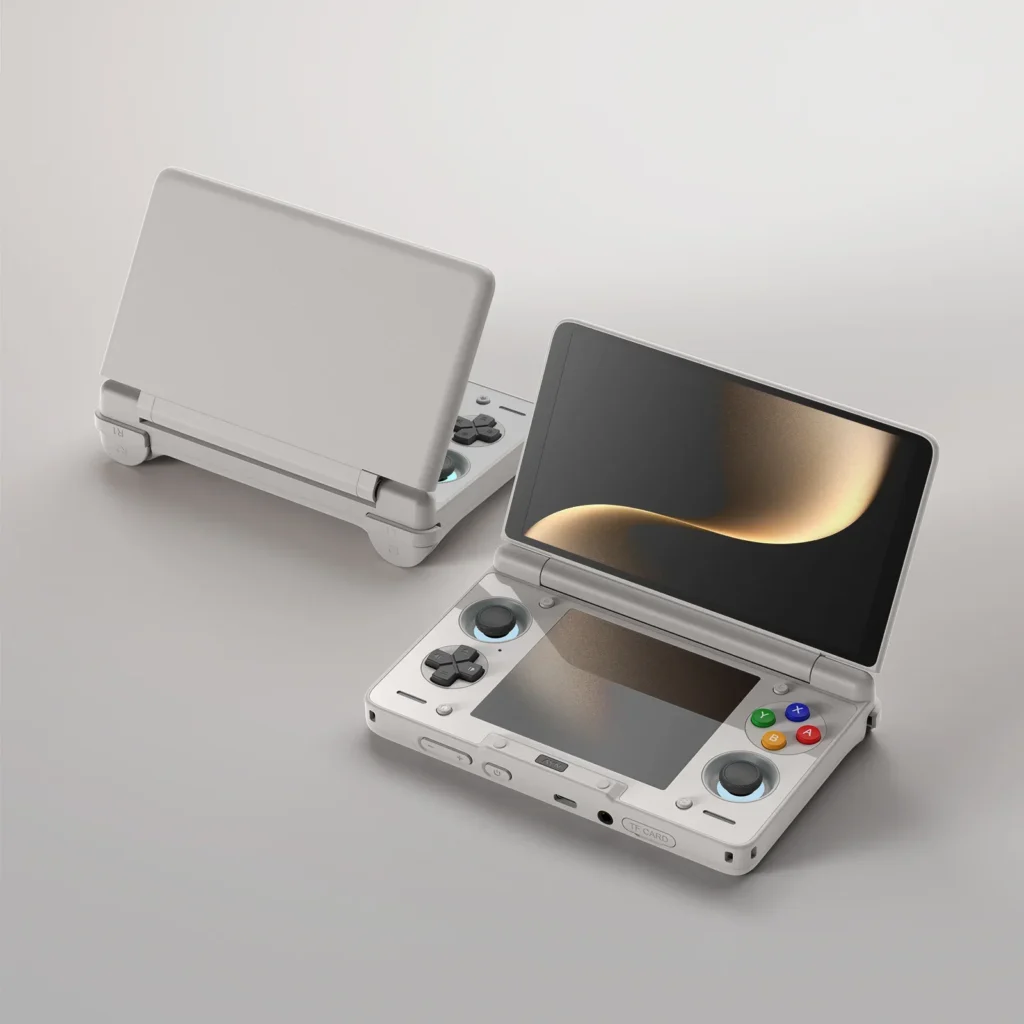
I’m about to buy a handheld game console in the year 2026, which is either the most reasonable thing It’s the AYN Thor — a dual-screen clamshell Android handheld that looks like the Nintendo DS grew up, got sharper, and decided it wanted to run games that had no business being portable when I was a kid. I have a full-time job. A kid on the way. Several YouTube channels and websites that constantly need attention. The sensible move would be to buy nothing, unsubscribe from every gadget newsletter, and spend my spare time doing whatever it is adults do when they have their life together.
But that’s not the life I’m living.
So I’m buying the Thor as a tool for stealing tiny slices of fun back from a schedule that eats everything.
The first time a game felt like a place
My first real gaming memory is ridiculously specific.
A dark fall evening in 1999. We were visiting friends of my parents, they had a Nintendo 64, and we were allowed to poke around Super Mario 64 — mostly the spooky Boo level. I barely accomplished anything. I just wandered, listened to the soundtrack, and soaked up the atmosphere like a six-year-old who’d discovered a secret room in the world. That’s when games I ralised gaming was about sicorvering eand explorig places. Probably why I and peple all arround the world love the The Legend of Zelda series so much.
A few years later it was the N64 greatest hits: Mario Kart 64, Super Mario 64, and Ocarina of Time. Zelda didn’t even need me holding the controller — watching someone else play was enough. The game felt huge, real and magic.
Then handhelds happened. First: a borrowed purple Game Boy Color and Pokémon Crystal. I still remember the Johto music. I beat the Elite Four with a Golduck after what felt like thirty failed attempts and an absurd amount of leveling. Then a borrowed Game Boy Advance and Rayman and I lovd the enivroment and the soundtrack of it. I’ve wanted to revisit it for years.
My first own handheld was a first-gen Nintendo DS with Super Mario 64 DS. I’ll die on this hill: the remake improved on the original in a bunch of ways, and the clamshell format made it feel like I could carry an entire world anywhere. Later it was Metroid Prime Hunters and GoldenEye: Rogue Agent. And Zelda kept haunting me. I remember craving that fold-shut convenience while thinking about Ocarina of Time. There were even early internet videos claiming it was running on a DS — fake, obviously, but I still went down the rabbit hole trying to figure out if the hardware could technically pull it off.
Eventually I sold the DS, grew out of that ecosystem, and moved on.
I borrowed a Gamecube from a friend and finally got to play thrugh Ocariana of time through the gamecube version that shipped with early copies of the The Legend of Zelda, the Windwaker. That was one hell of a ride.
When the phone became the handheld
In 2008 I got a Nokia N78, and it became my first emulation device. That’s where I played Advance Wars for the first time, replayed The Minish Cap, and revisited Pokémon Emerald. I wasn’t chasing perfect accuracy. I just loved the idea of carrying an era in my pocket.
Around the same time I was staring at the OpenPandora like it was forbidden fruit — a Linux handheld people talked about like a secret club. In my head, it’s basically the spiritual ancestor of a device like the Thor.
Then smartphones got fast in a very specific way. The iPhone 3GS and Google Nexus One showed up with Cortex-A8 class performance, and suddenly N64 emulation felt close. The Nokia N900 — same vibe, plus Linux — made the portable N64 dream real. I tried PC emulation too, finished Ocarina of time again but it never clicked neither as a gaming devince nor remapping the gamepad to a qwerty keyboard. I tried Majora’s Mask too, but eventually moved on to tinkering with DAWs and CS 1.6 on local servers in high school.
By 2011 I had a Huawei U8800 running Mupen64 with Super Mario 64 basically flawlessly. Funny thing: I was seventeen and had already drifted away from gaming again. I realized I liked the possibility of playing more than the actual sessions.
I breifly bought the 2DS and the legend of Zeda ocarina of time 3D in 2014 , but at the age of 21 I the world of beeing a student was a lot more and sold it off shortly after. My next handheld renaissance hit in 2019 with the OnePlus 6 — the first phone I owned that could run GameCube properly via Dolphin. I did my first real playthrough of Super Mario Sunshine using a Bluetooth gamepad, and it was actually a great experiance.
Since then I’ve mostly had underpowered phones with weaker driver support — Exynos, Tensor. My phone became what it is for most of us: communication, photos, and the everyday tool for everything else.
So why the Thor, specifically?
If you zoom out, we’re in a weirdly amazing era for handheld and retro gaming. There are more options than ever, and almost all of them are good at something.
Nintendo still owns the mainstream lane. I still play a first-gen unit. But here’s the honest part: it doesn’t fit my day the way I want it to. The Switch is portable, sure, but portable in the way a small laptop is portable. You bring it when you’ve decided you’re going to use it. It’s a commitment.
Same goes for the Switch 2 and PC handheld world — Steam Deck, ROG Ally, Legion Go — which is incredible technology. It’s also, for my life, the wrong kind of heavy. Wrong kind of setup. Wrong kind of “just a quick session.”
And then there’s phone emulation, which I’ve done plenty, especially on flights. Phone emulation is always the same story for me: exciting for five minutes, annoying for the next thirty. Touch controls are a compromise. Bluetooth or usb connected controllers have matured, but that reuires a setup step itself. And your phone is already your boarding pass, your camera, your map, your emergency charger, your entire nervous system.
What I want is a device that reduces friction.
Open. Play. Close. That’s it.
And that’s the part the AYN Thor nails — at least on paper. It’s a clamshell handheld with two OLED screens: a roughly six-inch top display with a high refresh rate, and a smaller lower panel (about 3.9 inches) sitting above the controls. It’s the DS layout, modernized, but without pretending we still live in 2006.
That dual-screen design isn’t just a cute throwback. It changes what the device feels like in your hands and in your brain. A slab handheld can be great — I’ve used them — but a clamshell has this built-in boundary. You can literally fold the hobby shut.
The real reason I haven’t bought a handheld sooner
People who are trying to eat less chocolate often don’t keep chocolate in the house. Not because they hate chocolate. Because they know how their brain works at 10:30 PM.
That’s been my hesitation with handhelds. Not price. Not specs. Not even the whole “emulation is complicated” thing.
Time.
If I buy a new toy, I will use it. And if I’m not careful, I’ll use it in exactly the way a stressed brain wants to: as an escape hatch. The easy button. The little dopamine slot machine.
Right now, time is my tightest resource. Full-time job, kid incoming, and the kind of constant side-project churn where you’re always one idea away from making your life twelve percent harder. So my goal isn’t “get more entertainment.” My goal is “get the right kind of entertainment.” The kind that fits into micro-moments and doesn’t demand a whole evening.
The Thor makes sense because it seems built for exactly that. Small sessions. A bit of play, then back to reality.
The backlog that’s been haunting me since childhood
There are GameCube titles I never really got to try: Resident Evil 4, Lugis mansion, Paper mario the thousand year door, Metrod prime and many more. There are DS and 3DS games I never touched at all.
And Zelda is still sitting there like a personal dare. I never finished Majora’s Mask on an emulator about sixteen years ago, then life happened and I drifted away. I’ve heard so much praise for it that it’s become this weird little pressure point — one of those games you feel like you should have a relationship with.
I travel a lot and between all the work spent while traveling there should also be a bit of escapism and fun. And 10 to 20 minutes every noe and then is all I need.
I also keep thinking about is everything else you can do with that second panel. A map. An inventory. A guide. Notes. A little browser window with the exact thing you always forget. And sure — a chatbot. I like the idea of keeping the game on the top screen and having a “help me, but gently” assistant open on the bottom. Like a modern strategy guide that can answer the specific question you have without spoiling the whole thing.
It also keeps me off my phone. That might sound minor, but it isn’t. When I game on my phone, I’m constantly one notification away from becoming a different person. The person who checks email “real quick.” The person who opens a message thread and loses twenty minutes. The person who ends up scrolling for no reason and then feels vaguely annoyed about it.
A dedicated handheld cuts that loop. And the clamshell adds a physical punctuation mark to the session. Close it, done. No lingering.
Specs, and my desire to never think about specs again
The Thor comes in multiple configurations. The high-end versions are built around a Snapdragon 8 Gen 2 — not the newest chip in the world, but still a very serious piece of phone-class silicon. The lower-cost model drops to an older Snapdragon 865.
I’m leaning toward the “just give me the top one” approach. Big storage, lots of RAM. Because I know myself. I don’t want to spend the next two years managing storage like it’s a side hobby. I don’t want to wonder if the version I bought is the reason one emulator stutters on one specific game. I don’t want the “almost enough” model.
There’s a certain kind of peace in overbuying once and then ignoring the problem forever.
Is it rational? Maybe not. But neither is buying a handheld at all, so we’re already in the zone where feelings and practicality are holding hands.
If you follow handhelds even a little, you know the rhythm: announcements, batches, firmware updates, new chips, then the next model. The market moves fast, and the hype cycle moves faster. So yeah — it’s entirely possible that six months after I buy this thing, there will be a “Thor 2” rumor floating around, or a new clamshell competitor with a brighter screen or better thermals or a slightly nicer hinge.
Waiting costs you the small moments you could’ve used now. These devices also live or die by software and community, not just hardware. The handheld scene has this mechanical-keyboard energy: the device matters, but the real magic often shows up in the weeks after launch. Launchers, performance tweaks, controller mapping, “here’s the perfect setup” threads, and the collective debugging of all the weird stuff that happens when enthusiasts try to run twenty years of gaming history on modern silicon. And with the latest advancments of its turnip drives I am pretty confident the origianl Thor will be much more mature from a software standpoint than compared to the Thor 2 when it will be announced sometime late this year or next. So I an wait a year or maybe two before I get the Thor 2 when it has matured as well.
I’m not buying the Thor because it’s perfect. I’m not buying it because it’s the last device I’ll ever want.
I’m buying it because it fits a very specific problem I’ve had for a long time: I want access to my personal game history at any given time – especially when traveling.
There’s a version of me in 1999, sitting in front of a TV in someone else’s living room, who would think the AYN Thor is scince fiction. And boy what a time we live in with this ammount of power in a compact DS-like formfactor.
So yeah. I’m buying the handheld.